 by
by 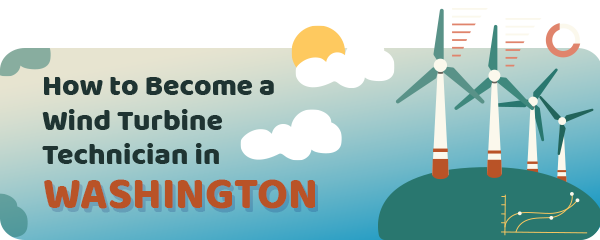
Washington is a real wind-work state, but the opportunity is concentrated in specific parts of the map.
Most of the state’s utility-scale wind development is concentrated in the Columbia Basin and central or southeastern Washington, especially in counties like Benton, Klickitat, Kittitas, Walla Walla, and nearby areas.
Washington has roughly 3,387 megawatts of operating wind capacity, so this is not a made-up career path.
At the same time, it is not evenly distributed across the state.
If you want to become a wind turbine technician in Washington, the smartest move is to build strong electrical, mechatronics, automation, or maintenance skills and aim them at the regions where wind already exists.
What Does a Wind Turbine Technician Do?
A wind turbine technician inspects, maintains, troubleshoots, and repairs wind turbines.
That usually means climbing towers, checking electrical and mechanical systems, replacing worn parts, reading fault data, testing components, and following strict safety procedures.
It is physical work, but it also takes strong troubleshooting skills and a solid understanding of systems.
In Washington, those same skills can also transfer into hydropower, utilities, manufacturing, industrial maintenance, and field service.
That gives the career path more stability, especially in a state where wind jobs are real but regional.
Steps to Become a Wind Turbine Technician in Washington
Earn a High School Diploma or GED
This is the usual first step.
Helpful classes include algebra, physics, electronics, shop, and computer courses.
Wind technicians work with schematics, measurements, controls, and test equipment, so a technical foundation helps.
Complete Technical Training
Washington usually makes more sense as a strong related-training state than a wind-only school state.
The best routes usually include:
- Mechatronics
- Industrial maintenance
- Automation and controls
- Electrical technology
- Electronics technology
- Engineering technology
That is the smart way to approach wind turbine technician training in Washington.
Employers care more about whether you can work safely and solve equipment problems than whether your diploma says wind.
Gain Hands-On Experience
Employers want people who can work on real systems.
Good experience can come from lab-heavy programs, maintenance jobs, electrical helper work, industrial service roles, manufacturing, or utility-related work.
In Washington, it especially helps if your training lines up with the Columbia Basin or the central Washington energy corridor.
Learn Workplace Safety
Safety is a huge part of this career.
You should get comfortable with fall protection, rescue awareness, lockout and tagout, electrical safety, CPR, and first aid.
Programs with hands-on industrial labs can be a big advantage because they help you get used to real equipment and safe work habits.
Consider Helpful Certifications
Washington does not usually require a special state wind technician license.
Helpful credentials may include OSHA 10 or OSHA 30, CPR and first aid, climbing and rescue training, and electrical safety training.
Some students also benefit from industrial automation or controls certifications because turbines depend so heavily on electromechanical systems.
Apply for Jobs in Washington
Search broadly instead of waiting for one exact title.
Look for roles such as:
- Wind turbine technician
- Field service technician
- Industrial maintenance technician
- Electrical technician
- Mechatronics technician
- Electromechanical technician
- Renewable energy technician
In Washington, it also helps to search by region.
The Columbia Basin, south-central Washington, and the area around existing wind farms make more sense than the state as a whole.
Do You Need a License or Certification in Washington?
Usually, no.
Washington does not typically require a special state-issued license just to work as a wind turbine technician.
What matters more is your technical training, your safety background, and your ability to work in the field.
That is good news because Washington has several schools that can build the right skill set, even if they are not labeled as wind programs.
Best Schools in Washington

Big Bend Community College
Big Bend Community College is one of the most geographically logical schools to consider because it sits in Moses Lake, right in a part of Washington that makes sense for energy, field service, and industrial systems work.
Programs Offered
Big Bend is most relevant through technical and industrial pathways rather than a dedicated wind degree.
Students looking toward wind should focus on training that builds electrical, maintenance, automation, and troubleshooting ability.
Its location in central Washington is part of the appeal because it puts students closer to the kind of regional job market where wind work is more believable.
Tuition and Cost
For 2025 to 2026, Big Bend’s cost of attendance materials show standard annual tuition and fees in the public community-college range.
Recent state-based comparisons place in-state tuition and fees at about $5,059 for the year.
The school’s broader financial-aid budget materials show a full nine-month student budget beyond just tuition, but for direct academic costs, the in-state figure is roughly in the low-$5,000 range.
Why It Stands Out
Big Bend stands out because of its location.
In Washington, geography matters, and Moses Lake makes more sense for this career path than a random urban campus far from the state’s wind belt.
Columbia Basin College
Columbia Basin College is one of the more practical public options in Washington for students who want to build a technical base near one of the state’s most energy-relevant regions.
Programs Offered
CBC is strongest through electrical, automation, and technical pathways rather than a wind-only program.
Students aiming at wind should look for coursework tied to industrial systems, troubleshooting, electrical fundamentals, and controls.
Its location in the Tri-Cities area is valuable because that region sits close to energy infrastructure and technical employers.
Tuition and Cost
CBC lists tuition and fees for full-time enrollment during the 2025 to 2026 school year at approximately $6,070.05.
That is a useful number because it reflects full-time study rather than only a per-credit estimate.
Students should still budget separately for books, supplies, and living expenses.
Why It Stands Out
CBC stands out because it combines public-college affordability with a location that makes sense for Washington’s wind and energy corridor.
Walla Walla Community College
Walla Walla Community College is one of the most relevant Washington schools for this career path because of where it is.
Southeastern Washington is close to real wind-project territory, and that gives the school a more believable connection to field-service work than a generic distant campus.
Programs Offered
WWCC makes the most sense through technical, industrial, and systems-based programs rather than a dedicated wind degree.
Students should focus on electrical, automation, or maintenance-heavy pathways that prepare them for troubleshooting and field work.
Tuition and Cost
WWCC’s 2025 to 2026 lower-division tuition schedule shows that a full-time academic year of 15 credits per quarter is estimated to cost about $5,442 in tuition and mandatory fees for Washington residents.
Program-specific fees can add more depending on the pathway.
Why It Stands Out
WWCC stands out because it gives students a lower-cost route into technical training in one of the more wind-relevant parts of the state.

Perry Technical Institute
Perry Technical Institute in Yakima is one of the strongest hands-on career schools in Washington for students who want to enter the field through electrical, instrumentation, or industrial maintenance skills.
Programs Offered
The best fit here is usually Electrical Technology, Instrumentation and Industrial Automation, or related applied technical training.
These programs are not wind-only, but they line up very well with the actual work turbine technicians do, especially around troubleshooting, controls, motors, electrical systems, and maintenance.
Tuition and Cost
For 2025 to 2026, Perry Tech lists these costs for a 6-month program block:
- Tuition: $10,770
- Lab fees: $350
- Technology fees: $100
- Tool and material fees: $320
- Total tuition and fees: $11,540
- Books: $630
- Other materials and tools: $900
- Other certifications: $425
- Total additional estimated costs: $1,955
- Total estimated cost of enrollment: $13,495
Its broader annual cost-of-attendance materials list total direct tuition and fees of $26,743 for the award year, with books and supplies estimated at $4,225.
Why It Stands Out
Perry Tech stands out because it is intensely hands-on and career-focused.
For a student who wants strong industrial and electrical training in Washington without a lot of academic padding, it is one of the best choices.
Centralia College
Centralia College is worth considering for students who want a lower-cost public option with technical pathways that can feed into industrial maintenance, automation, and related energy work.
Programs Offered
Centralia is not a wind-specific school, but it does offer technical and applied programs that can help students build a wind-ready foundation.
It works best for students who want affordability and flexibility, and then plan to move into the workforce through experience or regional job searching.
Tuition and Cost
Centralia’s 2025 to 2026 annual student budget for Washington residents in a bachelor’s track lists tuition and fees at $8,115.
For lower-division students, the community-college tuition structure is generally lower, but the school’s published cost materials still show that direct academic costs remain in a manageable public-college range.
Students should also watch for lab and course-specific fees.
Why It Stands Out
Centralia stands out as a flexible public option for students who want to build core technical skills without committing immediately to a private trade-school price.

Washington State University Tri-Cities
WSU Tri-Cities is not the fastest route into an entry-level wind site job, but it is relevant for students who want a stronger engineering or engineering-technology path while staying in one of Washington’s most energy-relevant regions.
Programs Offered
The most relevant directions are engineering and engineering technology, especially for students interested in systems, controls, power, and broader energy-sector careers.
This is a better fit for students who want long-term technical depth rather than only the quickest workforce certificate.
Tuition and Cost
For 2025 to 2026, WSU Tri-Cities lists resident undergraduate tuition rates that work out to about:
- Tuition: $5,839 per semester
- Required fees: about $263 per semester
- Total: about $6,102 per semester for resident undergraduates
That puts direct resident tuition and fees at roughly $12,204 per academic year before books, housing, and transportation.
Why It Stands Out
WSU Tri-Cities stands out because it offers a deeper technical route within a region that makes real sense for energy and infrastructure careers in Washington.
| School Name | Address |
|---|---|
| Big Bend Community College | 7662 Chanute St NE, Moses Lake, Washington 98837-3299 |
| Columbia Basin College | 2600 North 20th Avenue, Pasco, WA 99301 |
| Walla Walla Community College | 500 Tausick Way, Walla Walla, WA 99362. |
| Perry Technical Institute | 2011 W. Washington Ave, Yakima, Washington, 98903 |
| Centralia College | 600 Centralia College Blvd., Centralia, WA 98531-4099 |
| Washington State University Tri-Cities | 2710 Crimson WayRichland, WA 99354 |
Salary and Job Outlook in Washington
Washington has a real wind industry, but the opportunity is concentrated rather than universal.
The state has about 3,387 megawatts of operating wind capacity, and most of that is tied to specific central and southeastern corridors instead of the whole state.
A practical pay picture looks like this:
- Entry-level roles may start around the low-$20s per hour
- Technicians with stronger experience may move into the mid-to-upper $20s per hour
- Specialized field-service or travel-heavy roles can move into the $30-plus range
That puts many workers in a rough range of about $50,000 to $75,000 per year, with higher upside when overtime, travel, or advanced troubleshooting responsibilities are involved.
Annual Salary Range:| Location | Avg. Annual Salary |
|---|---|
| Auburn | $93,934 |
| Bellevue | $95,823 |
| Bellingham | $89,530 |
| Everett | $94,552 |
| Marysville | $94,556 |
| Lacey | $92,176 |
| Federal Way | $93,893 |
| Lakewood | $93,798 |
| Bremerton | $94,127 |
| Kent | $94,016 |
Final Thoughts
If you want to become a wind turbine technician in Washington, the smartest move is to think regionally and train strategically.
Washington has a real wind market, but it is concentrated in the Columbia Basin and nearby corridors, not evenly distributed across the state.
The best path is usually to build strong skills in mechatronics, electrical systems, industrial maintenance, or automation, then aim those skills at the parts of Washington where wind projects already operate.
That is what makes the Washington version of this career path different.
It is not about chasing a long list of wind-only schools.
It is about building the right technical foundation in the right part of the state.
Read the full guide: How to Become a Wind Turbine Technician
 Wind Turbine Technician by State